Teeth Cleaning
Professional Dental Hygiene Services
Professional teeth cleaning is the foundation of good oral health. Our expert dental hygienists use advanced techniques to remove plaque, tartar, and stains, leaving your teeth sparkling clean and your gums healthy.
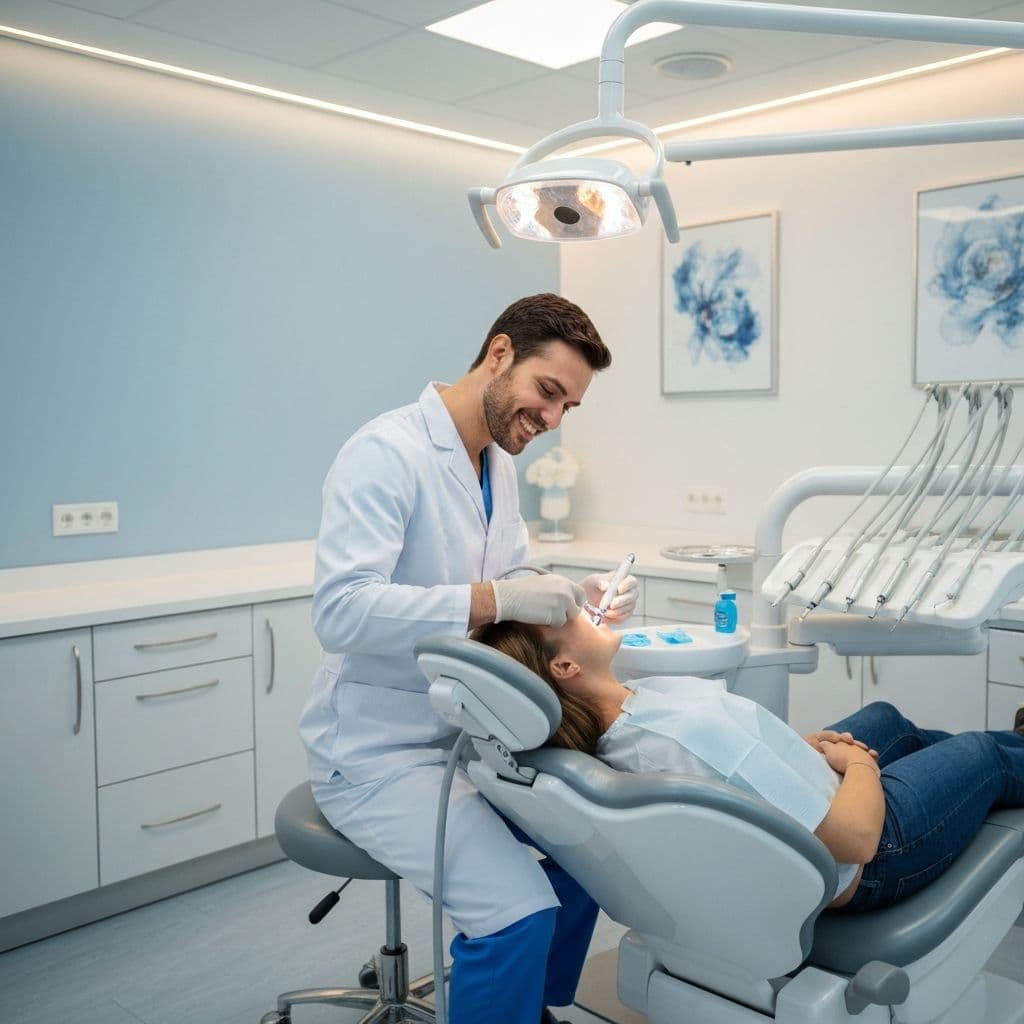
Treatment Time
30-60 minutes per session
What is Professional Teeth Cleaning?
Professional teeth cleaning, also known as dental prophylaxis, is a preventive dental procedure performed by a dental hygienist or dentist. It involves the removal of dental plaque and tartar (calculus) that has built up on your teeth over time.
Even with regular brushing and flossing at home, some areas of your mouth are difficult to reach, allowing plaque to accumulate and harden into tartar. Once tartar forms, it cannot be removed with a regular toothbrush and requires professional cleaning.
The procedure typically includes scaling (removing tartar above and below the gum line), polishing (smoothing tooth surfaces to remove stains), and sometimes fluoride treatment to strengthen tooth enamel.
When Should You Get Teeth Cleaning?
It has been 6 months or more since your last cleaning
You notice visible plaque or tartar buildup on teeth
Your gums bleed when brushing or flossing
You have persistent bad breath (halitosis)
Your teeth appear yellow or stained
You experience gum sensitivity or swelling
You are a smoker or consume staining beverages regularly
You have a history of gum disease or cavities
Benefits of Teeth Cleaning
Prevents cavities by removing plaque buildup
Reduces risk of gum disease (gingivitis and periodontitis)
Removes surface stains for a brighter smile
Freshens breath by eliminating bacteria
Allows early detection of dental problems
Saves money by preventing costly dental procedures
Improves overall health (oral health is linked to heart health)
Boosts confidence with a cleaner, healthier smile
Treatment Procedure
Examination
Your dental hygienist will first examine your teeth and gums using a small mirror to check for any signs of gingivitis, cavities, or other concerns.
Scaling
Using specialized tools (ultrasonic scalers and hand instruments), the hygienist removes plaque and tartar from around your gum line and between your teeth.
Deep Cleaning (if needed)
For patients with significant buildup, deep cleaning below the gum line may be performed to remove bacteria and calculus from tooth roots.
Polishing
A gritty toothpaste and high-powered electric brush polish your teeth, removing any remaining stains and smoothing the tooth surface.
Flossing
Expert flossing removes any remaining debris and ensures all areas between teeth are clean.
Fluoride Treatment (optional)
A fluoride gel or varnish may be applied to strengthen tooth enamel and protect against cavities for several months.
Treatment Duration
30-60 minutes per session
Recovery Time
No recovery time needed. You can eat and drink immediately after, though avoid staining foods/drinks for 30 minutes if fluoride was applied.
Frequently Asked Questions
How often should I get my teeth professionally cleaned?
Most dentists recommend professional cleaning every 6 months. However, if you have gum disease, are prone to cavities, or have other risk factors, you may need cleanings every 3-4 months.
Is teeth cleaning painful?
Professional teeth cleaning is generally not painful. You may feel some pressure or mild sensitivity, especially if you have sensitive teeth or significant tartar buildup. Let your hygienist know if you experience discomfort.
Can teeth cleaning damage my enamel?
No, professional teeth cleaning does not damage enamel when performed correctly. The tools used are designed to remove soft plaque and hard tartar without harming the underlying tooth structure.
Why do my gums bleed during cleaning?
Bleeding during cleaning often indicates gum inflammation (gingivitis). This is actually a sign that cleaning is needed. With regular cleanings and proper home care, bleeding should decrease over time.
What's the difference between regular cleaning and deep cleaning?
Regular cleaning focuses on the tooth surface and just below the gum line. Deep cleaning (scaling and root planing) goes below the gum line to clean tooth roots and is needed when gum disease is present.
Ready to Get Started?
Book your consultation today and take the first step towards a healthier, more beautiful smile.