Braces & Aligners
Achieve Your Perfect Smile
Whether you prefer traditional braces or invisible aligners, our orthodontic experts will help you achieve the straight, beautiful smile you've always wanted. We offer customized treatment plans for patients of all ages.
Treatment Time
12-24 months average (varies based on complexity)
What are Braces and Clear Aligners?
Braces and clear aligners are orthodontic devices used to straighten crooked teeth, correct bite problems, and improve overall dental alignment. Both options apply gentle, consistent pressure to gradually move teeth into their desired positions.
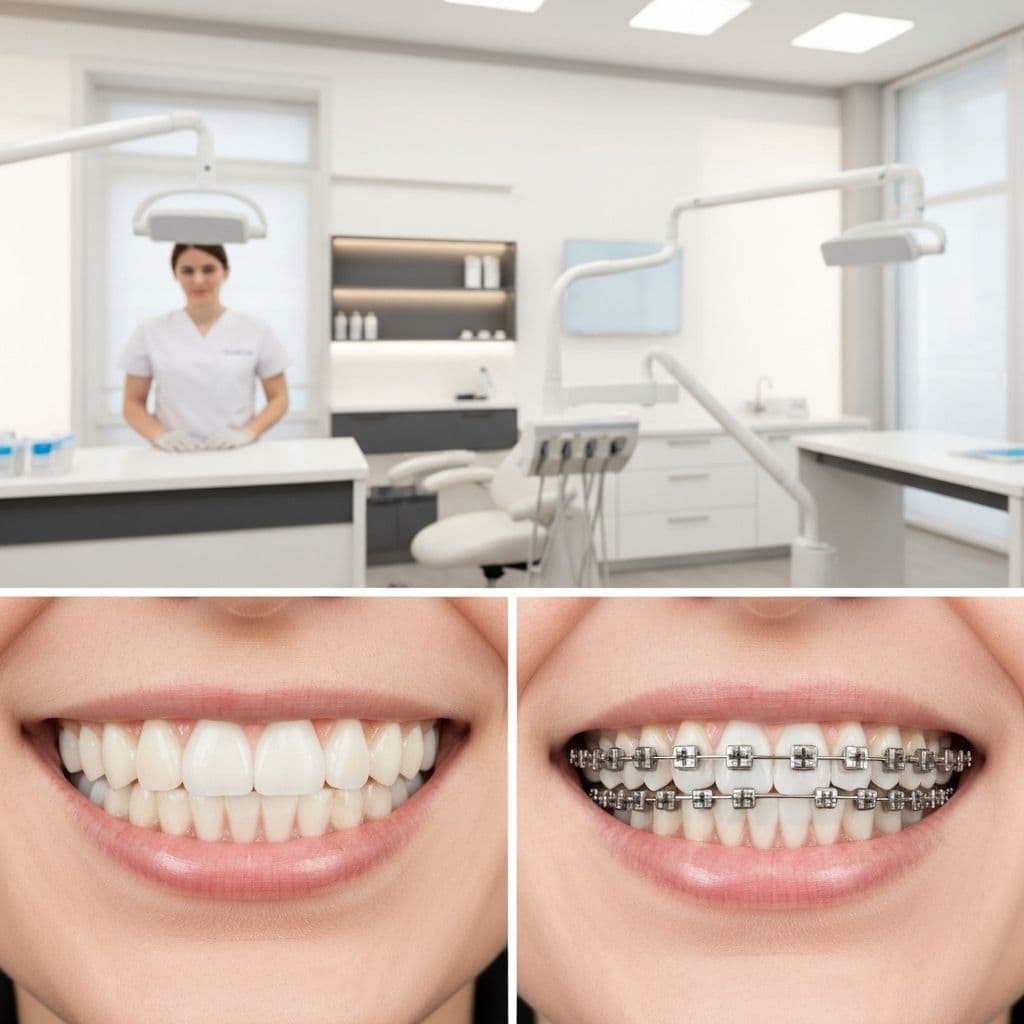
Traditional braces consist of metal or ceramic brackets bonded to teeth, connected by archwires that guide tooth movement. Modern braces are smaller, more comfortable, and more efficient than ever before.
Clear aligners (like Invisalign) are a series of custom-made, removable plastic trays that progressively shift teeth. They're virtually invisible and can be removed for eating and cleaning, making them a popular choice for adults and teens.
When Should You Consider Orthodontic Treatment?
You have crooked, crowded, or overlapping teeth
There are gaps or spaces between your teeth
You have an overbite (upper teeth protrude over lower)
You have an underbite (lower teeth protrude past upper)
You have a crossbite or open bite
Difficulty chewing or biting food properly
Jaw pain or clicking sounds when opening/closing mouth
You're self-conscious about your smile
Benefits of Braces & Aligners
Achieve a straighter, more attractive smile
Improve bite function and chewing efficiency
Reduce risk of tooth decay (straight teeth are easier to clean)
Decrease risk of gum disease
Alleviate jaw pain and TMJ disorders
Prevent abnormal tooth wear
Improve speech clarity
Boost confidence and self-esteem
Treatment Procedure
Initial Consultation
Comprehensive examination including X-rays, photos, and digital scans to assess your teeth and bite. Discussion of treatment options and goals.
Treatment Planning
Using advanced software, we create a detailed treatment plan showing the expected movement of your teeth and final result.
Braces Placement / Aligner Fitting
For braces: brackets are bonded to teeth and connected with archwires. For aligners: you receive your first set of custom trays with instructions.
Regular Adjustments
For braces: monthly visits to tighten wires and monitor progress. For aligners: changing to new trays every 1-2 weeks with periodic check-ups.
Active Treatment
Teeth gradually shift into proper alignment over the treatment period. You'll see progressive improvement at each visit.
Retention Phase
Once treatment is complete, retainers are provided to maintain your new smile. Initial full-time wear, then nights only long-term.
Treatment Duration
12-24 months average (varies based on complexity)
Recovery Time
No recovery time needed. Mild discomfort for a few days after braces are placed or adjusted. With aligners, slight pressure when starting new trays.
Frequently Asked Questions
Which is better: braces or clear aligners?
Both are effective for most cases. Braces are often better for complex cases and younger patients. Clear aligners are ideal for mild to moderate cases and adults who prefer a discreet option. We'll recommend the best option for your specific needs.
How long does orthodontic treatment take?
Treatment time varies depending on the severity of your case. Simple cases may take 6-12 months, while complex cases can take 2-3 years. The average treatment time is 18-24 months.
Are braces painful?
You may experience some discomfort when braces are first placed and after adjustments, typically lasting 3-5 days. This is manageable with over-the-counter pain relievers and soft foods. Clear aligners generally cause less discomfort.
Can adults get braces?
Absolutely! There's no age limit for orthodontic treatment. About 25% of orthodontic patients are adults. Modern options like clear aligners and ceramic braces make adult treatment more discreet than ever.
How do I care for my teeth with braces?
Brush after every meal using a soft-bristled brush and fluoride toothpaste. Use floss threaders or a water flosser to clean between teeth. Avoid hard, sticky, and chewy foods that can damage braces.
Ready to Get Started?
Book your consultation today and take the first step towards a healthier, more beautiful smile.