Dental Implants
Permanent Solution for Missing Teeth
Dental implants are the gold standard for replacing missing teeth. They look, feel, and function like natural teeth, providing a permanent solution that can last a lifetime with proper care.
Treatment Time
3-6 months total (from placement to final crown)
What are Dental Implants?
Dental implants are artificial tooth roots made of biocompatible titanium that are surgically placed into your jawbone. They provide a strong foundation for fixed or removable replacement teeth that are designed to match your natural teeth.
Unlike dentures or bridges, dental implants fuse with your jawbone through a process called osseointegration. This makes them incredibly stable and prevents the bone loss that typically occurs when teeth are missing.
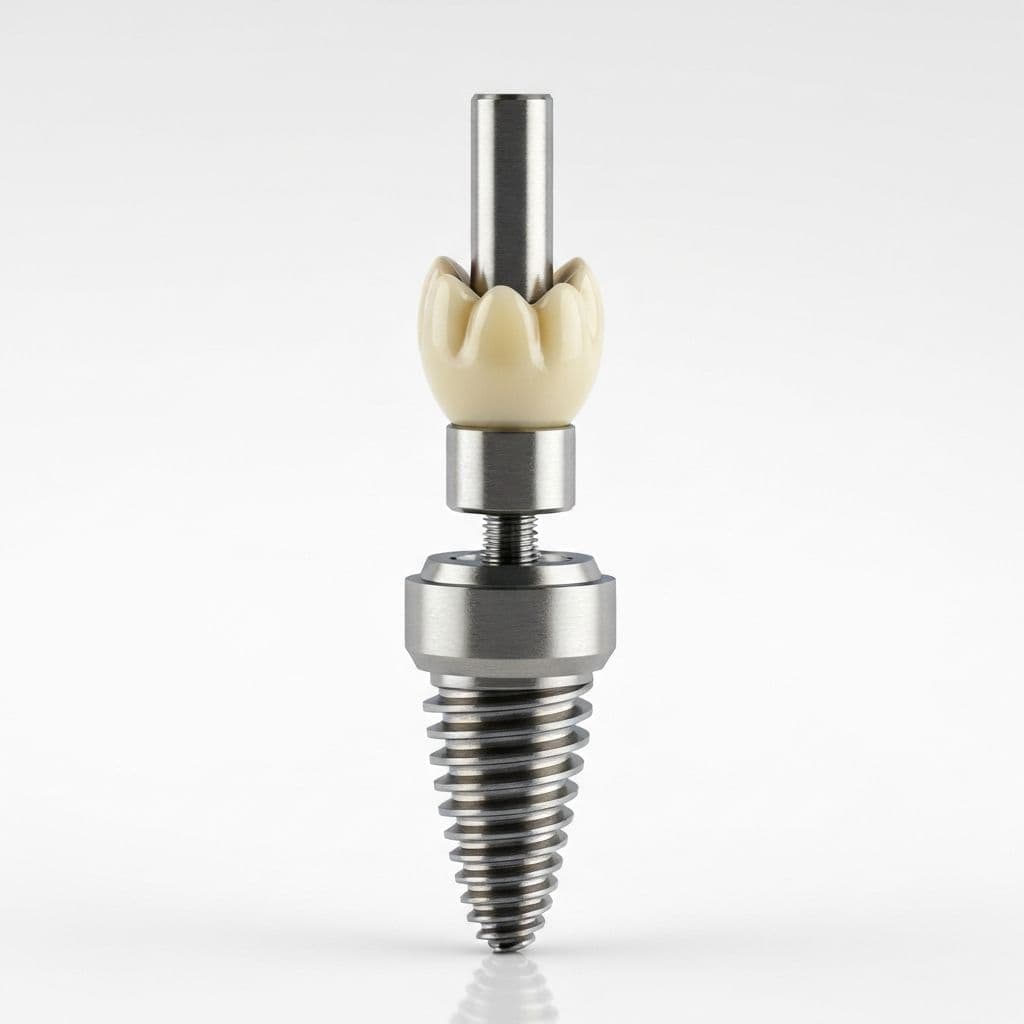
A complete dental implant consists of three parts: the implant (titanium post), the abutment (connector piece), and the crown (the visible artificial tooth). Together, these components create a restoration that is virtually indistinguishable from natural teeth.
When Should You Consider Dental Implants?
You have one or more missing teeth
Your jawbone has reached full growth
You have adequate bone density or can have a bone graft
You have healthy oral tissues
You don't have health conditions affecting bone healing
You are unable or unwilling to wear dentures
You want to improve your speech affected by missing teeth
You want a long-term, permanent solution
Benefits of Dental Implants
Look and function exactly like natural teeth
Last a lifetime with proper care (95%+ success rate)
Preserve jawbone and prevent bone loss
Don't affect or damage adjacent healthy teeth
Eliminate the discomfort of removable dentures
Improve speech clarity and eating ability
Boost self-confidence with a complete smile
No dietary restrictions once fully healed
Treatment Procedure
Initial Consultation & Planning
Comprehensive examination including 3D CT scans to assess bone density, plan implant placement, and create a customized treatment plan.
Bone Grafting (if needed)
If your jawbone isn't thick enough, bone grafting may be performed first. This adds bone material to create a solid foundation for the implant.
Implant Placement Surgery
Under local anesthesia, the titanium implant post is surgically placed into the jawbone. The gum is then closed over the implant.
Osseointegration Period
Over 3-6 months, the implant fuses with your jawbone. During this healing period, you may wear a temporary restoration.
Abutment Placement
Once healed, a minor procedure attaches the abutment (connector piece) to the implant. The gum heals around it for 2-3 weeks.
Crown Placement
Impressions are taken to create your custom crown. The final crown is attached to the abutment, completing your new tooth.
Treatment Duration
3-6 months total (from placement to final crown)
Recovery Time
Initial recovery: 1-2 weeks. Soft foods recommended during healing. Full osseointegration takes 3-6 months, but you can resume normal activities within a few days.
Frequently Asked Questions
Are dental implants painful?
The procedure is performed under local anesthesia, so you won't feel pain during surgery. Post-operative discomfort is typically mild to moderate and manageable with over-the-counter pain medication. Most patients report less pain than expected.
How long do dental implants last?
With proper care and regular dental check-ups, dental implants can last 25 years or even a lifetime. The crown may need replacement after 10-15 years due to normal wear, but the implant itself rarely fails.
Am I too old for dental implants?
Age is rarely a limiting factor. As long as you're in good general health and have adequate bone density (or can have bone grafting), dental implants can be successful at any adult age.
What is the success rate of dental implants?
Dental implants have an excellent success rate of 95-98% when performed by an experienced surgeon. Factors that can affect success include smoking, uncontrolled diabetes, and poor oral hygiene.
Can I get implants if I have bone loss?
Yes, in many cases. Bone grafting procedures can rebuild lost bone to provide adequate support for implants. Advanced techniques like zygomatic implants may also be options for severe bone loss.
Ready to Get Started?
Book your consultation today and take the first step towards a healthier, more beautiful smile.